Collection: Chandelier
A chandelier does something a single bulb cannot. It spreads light outward from several points at once, so a dining table is lit evenly across its length and the corners of the room stop falling away into shadow. It is a ceiling light that also sets the tone of the room it hangs in.
Where it belongs
Above a dining table, in an entryway where it's the first thing seen from the door, over a stairwell landing where the ceiling is high and a single fitting looks lost, or in a bedroom in place of a flat overhead light.
Light that spreads
Because the light comes from more than one point, it wraps around people at a table instead of casting hard shadows down onto them. That's what makes a dining room chandelier feel warm at dinner rather than clinical.
Warm or cool light, your choice
Fit warm-white bulbs for dining rooms, bedrooms and evening entertaining. Cool-white suits a hallway or stairwell where you want clear visibility. If your switch is dimmable, use dimmable bulbs — a chandelier is one of the few fittings people genuinely want to turn down.
Hanging height
Over a dining table, most people hang the base roughly 75–90 cm above the tabletop, so it lights the table without blocking the view across it. In a hallway or over a stairwell, keep the lowest point at least 210 cm off the floor.
Living with it
Dust the arms and any glass or crystal elements occasionally with a dry soft cloth, and let the fitting cool fully before touching bulbs or shades.

-
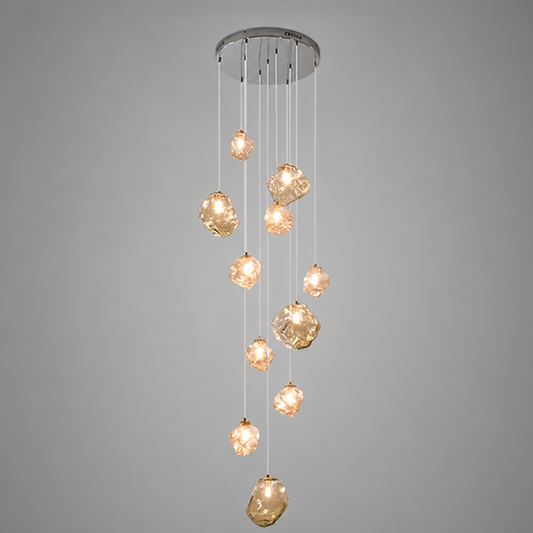
Modern Metal & Glass LED Multi-Head Chandelier
Regular price From $284.00Sale price From $284.00 Regular priceUnit price per -
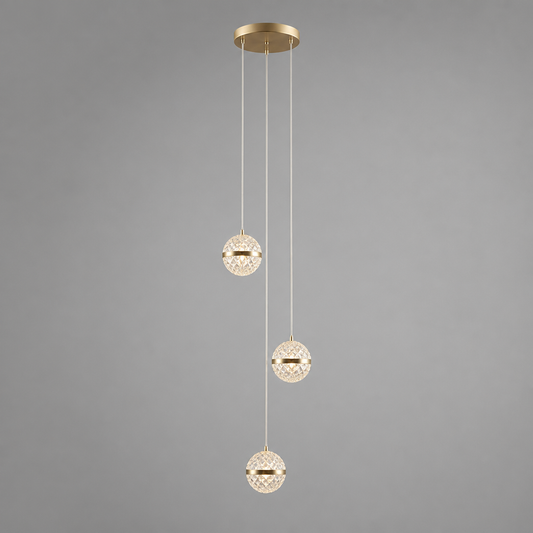
Modern Crystal LED Ball Chandelier
Regular price From $99.00Sale price From $99.00 Regular priceUnit price per -
Cloud-Shaped Art Glass Chandelier
Regular price $384.00Sale price $384.00 Regular priceUnit price per -
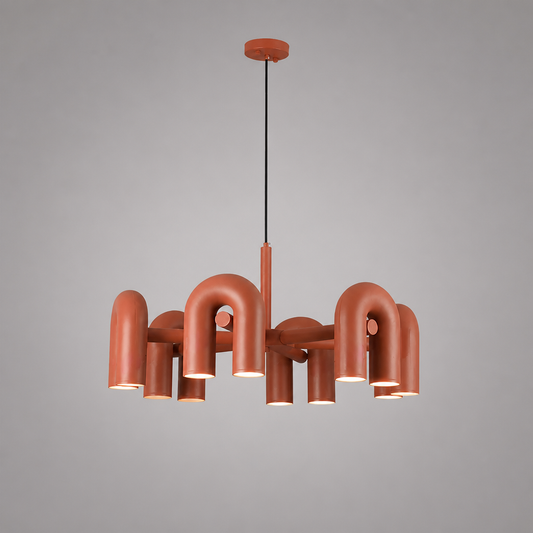
Scandinavian Iron & Acrylic LED U-Shaped Chandelier
Regular price $224.90Sale price $224.90 Regular priceUnit price per